Adaptive Jiu-Jitsu — on the mat, every child has their own pace
Movement, attention and participation in autism
Jiu-Jitsu does not diagnose autism, treat autism, or replace therapy. When it is adapted, safe, and taught with respect, however, it can be a complementary sporting practice that expands opportunities for movement, participation, self-regulation, and belonging.
By the second class, you do not know a child yet. You only know the beginning of a relationship.
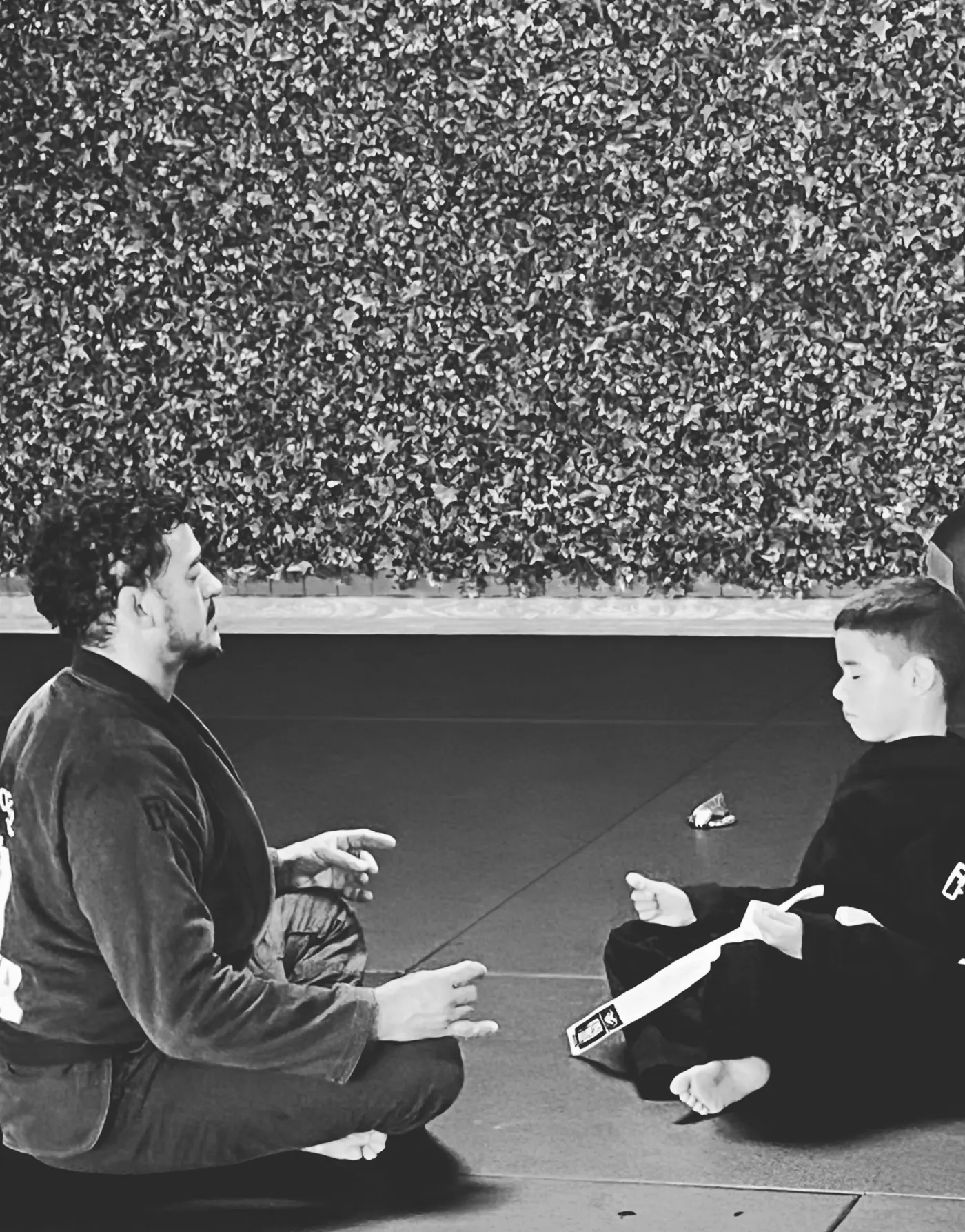
That was the case with the student we will call A, who is nine years old. At that point, the instructor is still learning: how the child enters the space; what holds their attention; which sensory inputs are uncomfortable; how much time they need to watch, understand, and try; and how they communicate interest, a need for a break, or discomfort. The aim is not to find a pattern that explains every autistic child — there is no such pattern. The aim is to build, patiently, a way of being together on the mat.
In adaptive Jiu-Jitsu, a class does not begin with the question, "Which technique are we teaching today?" It begins with a more important one: how can we create the conditions for this child to participate with safety, dignity, and curiosity? Sometimes that means putting on the gi and staying on the mat for a few minutes. Sometimes it means watching before accepting touch. In another class, it may mean reproducing a small part of a movement that seemed out of reach the week before. All of these moments matter.
"The goal is not to make a child fit an adult class. It is to open a door through which they can learn, move, and belong in their own way."
What does "evidence-based" really mean?
The phrase evidence-based practice should never be a decorative label. In work with autistic children and adolescents, it asks us to hold three things together: reliable scientific knowledge, responsible teaching experience, and careful attention to the person in front of us. Research helps us understand what may work, on average, under certain conditions; the instructor observes what works, what does not, and what needs to be adjusted for that learner; and the child and their support network help define what matters in their life.
The best available evidence suggests that physical activity interventions can support several areas of development for autistic young people. A meta-analysis of 29 studies and 1,009 participants found an overall moderate effect, with moderate-to-large effects for manipulative and locomotor skills, skill-related fitness, social functioning, and muscular strength and endurance [1]. A second systematic review, focused on behavioural outcomes, identified possible improvements in attention, cognition, socio-emotional functioning, and stereotypic behaviours in interventions involving martial arts, swimming, jogging, horseback riding, and yoga or dance [2].
This does not mean that every Jiu-Jitsu class will produce the same outcomes for every person. Nor does it justify promises of reduced behaviours, greater independence, or improved social functioning within a particular timeframe. Autism is a spectrum; children are individuals; context matters. Science provides direction, not a formula.
There is also an essential difference between saying that structured physical activity has a favourable evidence base and claiming that Brazilian Jiu-Jitsu, by itself, is a proven therapy. Direct evidence for Jiu-Jitsu is still at an early stage. One Brazilian study followed six children — three in an experimental group and three in a control group — through 80 sessions over one year and three months. The authors reported improvements in manipulative performance, self-care, and social function in the group that practised Jiu-Jitsu. However, the very small sample size means that these findings must be interpreted with considerable caution [3].
Research on related disciplines is also relevant, without making them automatically equivalent. In a six-month adapted judo programme involving 40 autistic children, the participating group improved on measures of motor skills and psychosocial indicators. The programme included clear routines, gradual progression, learning through imitation, objective instructions, and respect for individual pace [4]. It is this kind of thoughtful teaching — not simply the name of a discipline — that makes practice more accessible and more consistent.
What Jiu-Jitsu can offer
Jiu-Jitsu is a relational martial art. It places a person in contact with their own body, with space, with a partner, and with simple rules for being together. In an adapted approach, the aim is neither intensity for its own sake nor competition as a measure of worth. The aim is to create physical experiences that are organised, understandable, and safe.
From a motor perspective, moving on the ground, changing base, rolling, balancing, holding a position, and coordinating both sides of the body are all opportunities to practise fundamental movements. Repeating a simple action — turning the hips, placing the hands, or reorganising the body after an adapted fall — may matter far more than it first appears. The meta-analysis by Healy and colleagues supports the idea that physical activity programmes can contribute to locomotor and manipulative skills, as well as strength and endurance, all of which are part of the physical practice of Jiu-Jitsu [1].
From an attention perspective, the student is invited to follow short sequences: watch, listen to one clear instruction, try, stop, and try again. For some children, imitation is the entry point. For others, a picture, a silent demonstration, or a card with two steps is more accessible. Instead of rushing understanding, the instructor can reduce the complexity of the task. A technique does not have to appear as a complete whole; it can be built in small parts.
From a social perspective, the particular quality of Jiu-Jitsu is that it is practised in relationship, while that relationship can be carefully graded. A one-to-one lesson, or a two-adults-to-one-child ratio where needed, can make interaction more predictable. There is a partner, a rule, a sequence, and the option to stop. Greeting, waiting, taking turns, caring for another person's body, and respecting a pause signal become concrete social learning experiences rather than abstract instructions.
From an emotional perspective, the mat can be a place to experience challenge without humiliation. A child may miss a guard pass, decide they do not want to continue at that moment, feel frustration, or need more distance. The work is not to remove these experiences. It is to welcome them, name them where possible, and build ways back into participation. The tap, understood as a clear signal to stop, has particular educational value because it teaches two things at once: I can communicate my boundary, and I must respect someone else's boundary.
None of this requires a child to enjoy physical contact immediately. At the beginning, some children may prefer movements without a partner, parallel tasks, a foam stick, a ball, or practising with the instructor at a greater distance. Contact should always be gradual, explained, and consented to. There is no value in forcing exposure that a child is not yet able to tolerate.
What an adapted class looks like — and why it is not an adult group class
An adult group class often assumes certain capacities: tolerating a busier environment, following long explanations, changing partners, managing a fast pace, and understanding the group's implicit rules. There is nothing wrong with that format; it serves a different purpose. For many autistic children and adolescents, especially at the beginning of a sporting journey, these demands can take up so much energy that little is left for learning.
That is why one-to-one teaching, or a two-adults-to-one-child ratio, is not an "easier class." It is a more precise class. The instructor can regulate the volume of their voice, reduce sensory input, provide more processing time, adjust physical contact, repeat an instruction without rushing, and notice signs of fatigue or overload. Teaching becomes less of a struggle for attention and more of a gradual construction of trust.
At ATMA, a session may last between 30 and 45 minutes, but its duration is never the measure of its quality. A predictable structure is often helpful: arrival and a brief ritual; a visual preview of what will happen; a warm-up with familiar movements; a technical task reduced to a few steps; a playful application; a break, breathing practice, or return to bodily awareness; and a closing ritual with a simple review. The sequence can be stable without being rigid. If a child needs a break, the break is part of the class. If an activity is not accessible on a particular day, adapting is not giving up — it is teaching.
| Part of the class | Educational purpose | Possible adaptation |
|---|---|---|
| Arrival and visual schedule | Create predictability and support the transition onto the mat | Show two or three images: "warm up", "learn", "finish". |
| Warm-up | Organise the body and offer familiar movements | Animal walks, balance work, ground movement, or pushing a ball. |
| Technique in micro-steps | Learn without information overload | Demonstrate one step at a time; use fewer words; allow observation before trying. |
| Partner practice | Build relationship, turn-taking, and respect for boundaries | Start with a familiar instructor; reduce contact time; agree on a clear pause signal. |
| Adapted game or challenge | Give meaning to the skill being practised | Turn a movement into a simple mission with a visible, achievable goal. |
| Break and closing | Recognise bodily state and finish safely | A short breathing activity, choosing a feeling/sensation card, and a goodbye ritual. |
Repetition plays a central role. A child may need many lessons to understand a basic position. That is not a moral failure, a lack of motivation, or a measure of ability. It is learning. In some learning profiles, after many seemingly quiet attempts, a child watches, imitates, and reproduces a sequence with remarkable precision. The brain is practising; the body is learning; the person is finding their own way to participate.
Progress is not a race for belts
In an adapted class, assessing progress does not mean counting attendance, memorised techniques, or wins alone. Those data may have a place, but they are not enough. Every student begins from a different point; the fairest comparison is therefore the child with themselves over time.
Rather than asking only, "Have they learned the technique yet?", it is often more useful to ask: "Do they enter the mat with less tension?", "Can they watch a demonstration for a few seconds longer?", "Can they ask for a break?", "Can they tolerate a partner for a longer period?", "Can they repeat a movement with less support?", or "Do they choose to return after frustration?". These indicators are not intended to measure autism or replace clinical assessments. They are educational observations that help the instructor adjust the lesson.
| Area observed | What can be noticed during class | How it guides teaching |
|---|---|---|
| Participation | Entering the space, putting on the gi, staying in an activity, returning after a break | Adjust the session's length, routine, and level of demand. |
| Movement | Balance, locomotion, coordination, body organisation, and amount of assistance needed | Select preparatory movements and reduce or expand the steps. |
| Communication and choices | Gesture, speech, gaze, card, or a "yes", "no", or "stop" signal | Offer understandable ways to communicate and respect the response. |
| Relationship and boundaries | Accepting proximity, waiting for a turn, asking for space, recognising a partner's pause signal | Plan the progression of partner work and entry into small groups. |
| Self-regulation | Noticing fatigue, taking a break, breathing, and returning to an activity | Anticipate overload and build strategies that make sense to the child. |
At ATMA, this follow-up can be organised through everyday observations and regular reviews across motor, sensory, social-emotional, and technical domains. These are educational tools: they guide the next step in teaching; they do not measure a child's worth or provide a clinical assessment. Brief notes after class, small goals, and periodic reviews help prevent speed from being confused with progress. They also allow clear conversations with parents and caregivers — not through promises, but through what has been observed on the mat.
This also means that an individual characteristic should not be turned into an obligation. For example, eye contact should not be treated as a universal requirement for "good" participation. What matters is that the child has real, respected ways to communicate attention, choice, discomfort, interest, and boundaries — through speech, gesture, gaze, a card, augmentative and alternative communication, or any other form that is meaningful to them.
Meditation, presence, and pause: fewer promises, more resources
The word meditation can create expectations that are too large. In the context of an adapted Jiu-Jitsu class, it may be more accurate to speak of short practices of attention, breathing, and pause. This might mean counting three breaths before starting, noticing the feet on the floor, sitting quietly for a minute with a visual object, choosing between two ways of returning to an activity, or simply sitting safely after exertion.
Research into mindfulness interventions in autism is encouraging but remains limited. A meta-analysis of ten studies, including 233 autistic children and adults and 241 caregivers, found reported improvements in subjective wellbeing at the end of the programmes and suggested that effects were maintained at three months. The authors themselves emphasise that additional controlled research is needed to establish effectiveness more precisely [5]. It would therefore be inappropriate to present breathing or meditation as a universal solution for anxiety, distress, or emotional difficulties.
What these practices can offer within a class is simpler: a moment to notice the body and reorganise the experience. Some children may benefit; others may not enjoy them; still others may need a more concrete and less verbal version. The rule is straightforward: the practice should be optional, brief, adaptable, and never used to silence a child who is communicating discomfort. Safety comes before technique.
What Jiu-Jitsu is — and what it is not
It is important to be direct. Adaptive Jiu-Jitsu is a sporting, educational, and complementary offering. It can form part of a broader routine of development and wellbeing, in dialogue with the family and, where appropriate and authorised, with the professionals already supporting the child.
Jiu-Jitsu is not therapy. It does not replace occupational therapy, psychology, speech and language therapy, medical follow-up, educational support, or any other care that is appropriate for the child. It does not diagnose autism, determine support needs, or promise clinical outcomes.
An academy's responsibility is different, and equally serious. It is to provide a physically safe environment, trained adults, clear communication, respect for bodily boundaries, task adaptation, and a genuine willingness to learn alongside every student. The aim is not to turn the mat into a clinic. It is to make the mat a place of movement, relationship, and community.
A gi, a moving body, a place in the group
When A enters the mat for his second class, he may not know any technique yet. He may still be trying to understand the space, the instructor's voice, the feel of the gi fabric, or the very idea of practising with another person. None of this reduces the value of the class.
He is moving. He is practising possibilities for attention. He is taking part in an activity with a beginning, a middle, and an end. He is in a space where he can learn that there are clear rules, legitimate breaks, respected boundaries, and people willing to wait for him. Little by little, he is entering a community.
This is how we understand Jiu-Jitsu at ATMA: not as a promise of a cure, but as a practice of presence. A practice in which every child can find their own pace — and move forward from there.
References
- Healy, S., Nacario, A., Braithwaite, R. E., & Hopper, C. (2018). The effect of physical activity interventions on youth with autism spectrum disorder: A meta-analysis. Autism Research, 11(6), 818–833.
- Bremer, E., Crozier, M., & Lloyd, M. (2016). A systematic review of the behavioural outcomes following exercise interventions for children and youth with autism spectrum disorder. Autism, 20(8), 899–915.
- Lima, L. S., Amaral, M. F., Fontes, V. A. M., Couto, C. R., Almohalha, L., & Santos, S. P. (2021). Jiu Jitsu as a treatment tool for children with Autism Spectrum Disorder. Brazilian Journal of Physical Education and Sport, 35(4), 191–202.
- Morales, J., Pierantozzi, E., Fukuda, D. H., Garcia, V., Guerra-Balic, M., Sevilla-Sánchez, M., & Carballeira, E. (2022). Improving motor skills and psychosocial behaviors in children with autism spectrum disorder through an adapted judo program. Frontiers in Psychology, 13, 1067310.
- Hartley, M., Dorstyn, D., & Due, C. (2019). Mindfulness for Children and Adults with Autism Spectrum Disorder and Their Caregivers: A Meta-analysis. Journal of Autism and Developmental Disorders, 49(10), 4306–4319.
Editorial note: this article provides general information and does not replace individual medical, psychological, therapeutic, or educational guidance.
Adolfo Fabrício Martins — Lausanne, 13 August 2026
Version française : Jiu-Jitsu adapté — sur le tatami, chaque enfant a son propre rythme
Soyez le premier à aimer
Commentaires
Aucun commentaire pour l'instant. Soyez le premier à réagir.
Cours d'essai gratuit
Venez essayer le JJB à Lausanne
Le premier cours est offert. Sans engagement. Venez découvrir l'académie ATMA.
Réserver mon cours d'essai